
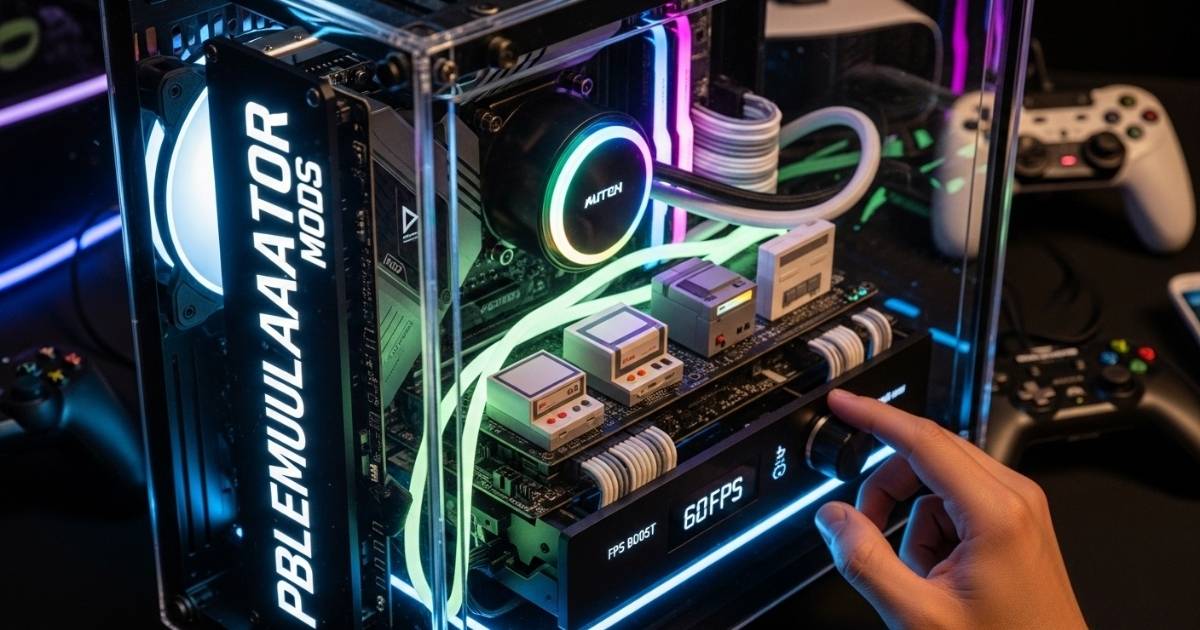
Ever fired up a classic game on an emulator and thought, “This could look so much better”? You’re not alone. Millions of retro gaming fans deal with choppy frame rates, blurry visuals, and outdated rendering every single day. That’s exactly where pblemulator mods come in. They don’t just patch up the rough edges. They completely transform how you experience emulated games, from sharper textures to buttery-smooth 60 FPS gameplay. Whether you’re new to emulation or a seasoned tinkerer, this guide covers everything you need to know.
What Are Pblemulator Mods?
Pblemulator mods are modifications applied either to the emulator software itself or to the games running on it. Think of them as upgrade kits for your retro gaming setup. Some mods tweak how the emulator renders graphics. Others fix bugs in specific games. Some go even further and replace entire texture sets with high-definition alternatives.
These mods aren’t built by corporations. They’re created by passionate developers and gaming communities who want to push emulation beyond its default limits. And honestly, the results are often jaw-dropping.
Read More: bobbilou05: Exploring the Digital Identity, Meaning, and Online Presence
Why Pblemulator Mods Are So Popular
The emulation scene has exploded in recent years. More people are revisiting childhood favorites, and many are discovering older titles for the first time. Standard emulator setups work fine, but they often fall short in key areas. That’s where the modding community steps in.
Hardware Limitations Removed
Older games were designed for consoles with strict hardware caps. Running them on modern PCs through emulators already removes some of those limits. Mods take it further by unlocking frame rate caps, expanding resolution support, and enabling features the original hardware could never handle. You get the classic experience without the classic frustration.
Visual Enhancements
Nobody wants to stare at pixelated muddy textures in 2025. Emulator graphics improvements through mods let you play decades-old games in resolutions that weren’t even possible when those games launched. We’re talking 4K support, anti-aliasing, and lighting effects that give old worlds a fresh coat of paint.
Gameplay Improvements
Some mods don’t touch visuals at all. They focus purely on how the game feels. Input latency reduction mods are a great example. Shaving even a few milliseconds off controller response can completely change how a fast-paced game plays. Others fix broken mechanics, re-balance difficulty, or restore cut content that never made it to the original release.
Preservation and Accessibility
Retro game emulation isn’t just about fun. It’s also about preservation. Many classic titles exist on aging, degrading media. Mods help communities preserve, document, and even improve these games so future generations can experience them. Accessibility mods also make older games more playable for people with disabilities, adding features the originals never considered.
Types of Pblemulator Mods
Not all mods are created equal. Here’s a breakdown of what’s out there.
Emulator-Level Mods
These are modifications made directly to the emulator software. Custom emulator builds often include performance patches, improved rendering backends, and better compatibility with a wider range of games. If the emulator itself is the bottleneck, this is where you start.
Game-Specific Patch Mods
Game patch modifications target individual titles. They might fix a game-breaking glitch that the original developers never patched, restore missing audio, or correct translation errors. These are incredibly targeted and usually built by people who know a specific game inside and out.
HD Texture Packs
HD texture packs replace the original low-resolution art assets with hand-crafted or AI-upscaled alternatives. The result is a game that looks modern while still feeling like the classic you remember. Some packs take years to complete and represent serious artistic effort.
Shader and Graphics Mods
Shader effects in gaming can simulate CRT scanlines for authenticity, add bloom lighting, improve shadow quality, or create entirely new visual styles. These mods plug directly into the emulator’s rendering pipeline and can dramatically shift the overall aesthetic of a game.
Performance and Speed Mods
These mods focus on frame rate enhancement and stability. If you’re trying to improve emulator performance on a low-end PC, speed mods can reduce resource demands, optimize how the emulator handles memory, and eliminate stuttering. They’re a lifesaver for older machines.
How Pblemulator Mods Work
Under the hood, most mods interact with the emulator’s core systems. Emulator-level mods often replace or extend core files within the emulator’s directory. Game patches typically use a patch file format that gets applied over the original game ROM. Texture packs work by redirecting texture load calls to new, higher-quality files stored in a designated folder.
The emulator rendering backend plays a central role here. Whether it uses Vulkan, OpenGL, or Direct3D determines which shader mods and graphics improvements are compatible. Understanding your emulator’s backend helps you pick mods that will actually work.
How to Install Pblemulator Mods (General Process)
Learning how to install pblemulator mods is simpler than most people expect. Here’s the general flow most setups follow.
- Download the mod from a trusted, reputable source.
- Read the mod’s documentation thoroughly before doing anything else.
- Back up your original emulator files and game saves.
- Place mod files in the correct directory as specified in the instructions.
- Enable the mod through the emulator’s settings or plugin menu.
- Test the game for stability before committing to a long play session.
Emulator configuration settings vary between platforms, so always check the specific instructions for your emulator version.
Best Practices for Using Pblemulator Mods
Keep Backups
Always back up your saves and original files before installing anything. Things can and do go wrong. A backup takes five minutes and can save hours of headache.
Use Trusted Sources
Stick to well-known modding communities, forums, and repositories. Shady download sites are a fast track to corrupted files or worse. If a source doesn’t have a track record, skip it.
Avoid Over-Modding
Stacking too many mods at once is a recipe for crashes and conflicts. Add mods one at a time, test between each addition, and you’ll have a much cleaner experience.
Read Compatibility Notes
Not every mod works with every version of an emulator or game. Check compatibility notes carefully. A mod built for an older emulator version might cause serious issues on a newer one.
Common Issues and Troubleshooting
Frequent Problems
Troubleshooting emulator mod issues usually starts with the same handful of culprits. Crashes on launch, missing textures, broken audio, and severe frame drops are the most common complaints.
Solutions
Start by disabling mods one at a time to isolate the problem. Make sure your emulator is updated. Verify that texture pack folders are named correctly and placed in the right location. If you’re using shader mods and experiencing performance drops, try switching your rendering backend. Community forums are genuinely valuable here since someone has almost certainly run into the same issue before you.
Legal and Ethical Considerations
This is a topic worth taking seriously. Emulating games you own is generally considered acceptable, though legal rules for emulator modding vary by region and situation. Distributing ROMs or copyrighted game files is a different matter entirely and is widely considered illegal. Mods themselves occupy a gray area. Original mod content created by the community is generally fine. Anything that redistributes copyrighted assets without permission is risky territory. Always do your homework before sharing or distributing mod content.
The Future of Pblemulator Mods
Emerging Trends
The modding scene is evolving fast. AI-assisted texture upscaling has already made HD texture packs more accessible than ever. Real-time ray tracing is beginning to appear in advanced shader projects. Community-driven emulator development is growing more sophisticated, with better documentation and modular architectures that make modding easier. Future trends in emulator modding point toward tighter integration between mod tools and emulator interfaces, lowering the barrier for newcomers while giving experts more powerful options.
Why Pblemulator Mods Matter
At their core, pblemulator mods represent something bigger than just better graphics. They’re a statement about ownership, creativity, and the value of gaming history. These projects are built by fans who care deeply about preserving and celebrating the games they love. They make classic titles more accessible, more beautiful, and more enjoyable for a whole new generation of players.
Final Thoughts
If you’ve been sitting on the fence about trying mods for your emulator setup, now is a genuinely great time to dive in. The community is active, the tools are more polished than ever, and the results speak for themselves. Start small, stay safe with your sources, and build from there. You might be surprised how much life there is left in the games you thought you’d already experienced fully.
FAQ’s
Are emulator mods safe to use?
Yes, when downloaded from reputable sources. Always scan files and avoid unknown download sites to stay protected.
How do emulator mods work?
They modify emulator files or game assets to improve visuals, fix bugs, or boost performance without altering the core game code permanently.
Can I use mods to fix lag in emulators?
Absolutely. Performance and speed mods are specifically designed to reduce lag and improve frame stability, even on lower-end hardware.
What are the best HD texture packs for emulators?
It depends on the game and platform. Community hubs like EmuTalk and dedicated subreddits are great starting points for finding highly rated packs.
Is emulator modding legal?
Modifying emulator software itself is generally legal. However, distributing copyrighted game content through mods is not. Always stick to community-created assets.