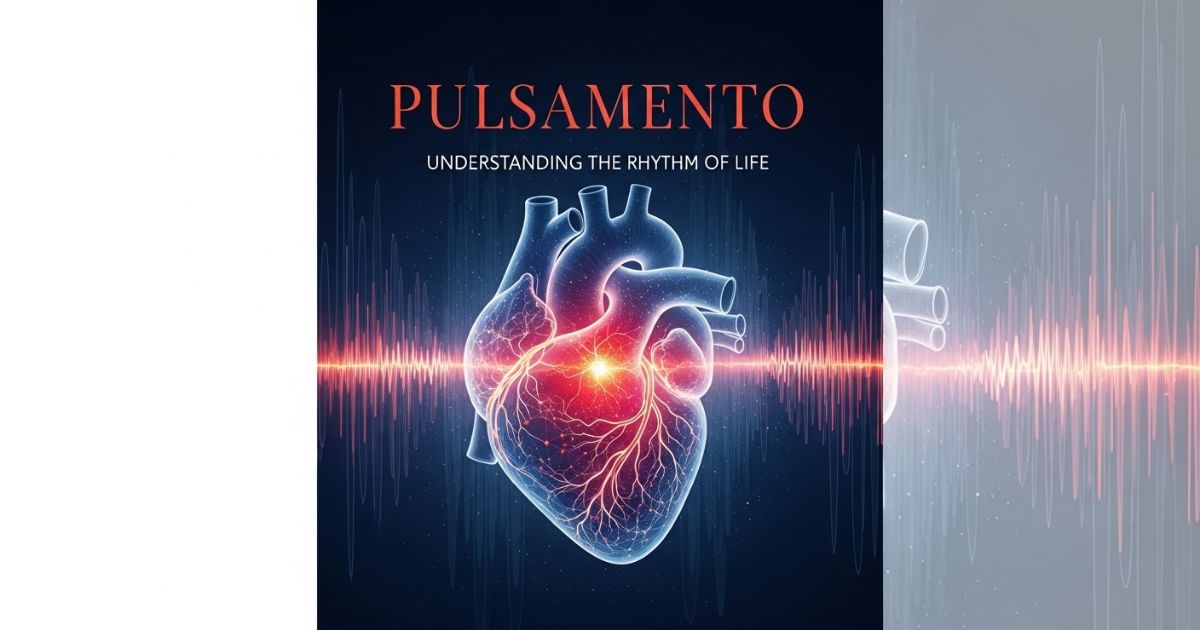
Everything around you has a rhythm. Your heart beats without you asking it to. Your lungs breathe on their own. Even the music you love follows a pulse you feel before you consciously hear it. Life, at its core, is rhythmic.
That rhythm has a name. Pulsamento captures the repeating, flowing patterns that run through your body, your technology, and your creative world. It is not just a biological term or a music concept. It is something far bigger. Once you understand it, you start seeing it everywhere, in your heartbeat, in your devices, in the art that moves you. This article breaks it all down in a way that actually makes sense.
What is Pulsamento?
Have you ever noticed how life never truly stands still? Your heart beats. Your lungs expand and contract. Music pulls you in with its steady pulse. All of this connects to one powerful concept: pulsamento. It refers to the rhythmic, repeating patterns of motion, energy, or signal that run through nearly every system in the natural and engineered world.
Think of it less as a technical term and more as a universal language. From the oscillatory behavior found in living cells to the mechanical motion cycles of machines, pulsamento captures the idea that rhythm is not just a feature of life. It is the foundation of it.
Biological Pulsamento
Inside your body, rhythmic patterns are everywhere. Your heart does not just pump blood randomly. It follows a precise, coordinated sequence driven by electrical signals. Your neurons fire in waves. Your cells communicate through what scientists call cellular signaling processes, tiny bursts of chemical and electrical activity that keep everything running in sync.
This is biological pulsamento at its core. It is the body’s way of maintaining order through repetition. Without it, systems fall apart. With it, life sustains itself with remarkable precision.
Technological Pulsamento
Engineers and scientists have drawn inspiration from biological rhythms for centuries. In technology, pulsamento shows up as electrical oscillations in circuits, signal processing systems in communication networks, and pulse-based technology in medical devices. These are not random innovations. They mirror the same rhythmic logic that keeps your heartbeat steady.
Pulsamento in Music and Arts
Music would not exist without rhythm. Dance would lose its soul. Even visual art leans on the idea of repetition and flow. The concept of pulsamento in creative fields represents something deeply human: our need to find and follow a beat. Whether it is a jazz drummer keeping time or a painter repeating a geometric motif, rhythm gives structure to expression.
The Significance of Pulsamento in Health
Your body is, in many ways, a symphony of rhythms. When those rhythms align, you feel well. When they fall out of sync, things go wrong. Understanding pulsamento in health is not just fascinating. It is genuinely useful for living better.
Cardiovascular Health
The cardiovascular system function depends entirely on rhythm. Your heart’s electrical system fires in a coordinated pattern to push blood through your body efficiently. Disrupt that pattern and you face serious consequences, from arrhythmias to cardiac arrest. Monitoring your heart rate is not just for athletes. It is a window into how well your body’s central rhythm is holding up.
Heart Rate Variability (HRV)
One of the most telling indicators of cardiovascular health is heart rate variability. HRV measures the tiny fluctuations in time between each heartbeat. A higher HRV generally signals a healthy, adaptable nervous system. A lower HRV can point to stress, fatigue, or underlying health concerns. Fitness trackers and smartwatches now use HRV data to give you real insight into your body’s rhythmic resilience.
Respiratory Health
Breathing follows its own rhythmic cycle too. Respiratory rhythm patterns are regulated by the brainstem, which sends signals to your diaphragm in a steady loop. When this cycle is disrupted, whether through sleep apnea, asthma, or anxiety, the ripple effects touch your entire body. Slow, controlled breathing is not just relaxation advice. It actively recalibrates your nervous system by restoring that natural respiratory rhythm.
Mental Health
Brain wave activity, measured through EEG technology, reveals that your brain operates in distinct rhythmic frequencies. Delta, theta, alpha, beta, and gamma waves each correspond to different mental states. Disruptions in these neural oscillations are linked to conditions like depression, anxiety, and ADHD. Therapies like neurofeedback aim to retrain these patterns, essentially coaching your brain back into healthier rhythmic behavior.
Fitness and Well-being
Athletes have long understood the importance of working within the right fitness heart zones. Training at the correct intensity, guided by heart rate monitoring, helps build endurance without overloading the body. The principle behind this is simple: honor the rhythm your body is operating in rather than forcing it into a pattern it is not ready for. That is pulsamento applied practically, every single day.
Read More: Esports News Dualmedia: The Ultimate Guide to 2026 Pro Gaming Trends
Pulsamento in Technology
Technology borrows from nature more than we often realize. The rhythmic logic behind biological systems has inspired some of the most transformative innovations in modern engineering.
Electronics and Signal Processing
Almost every electronic device you use relies on some form of oscillatory behavior in systems. Clocks, processors, radios, they all depend on precise, repeating cycles to function. Without rhythm at the hardware level, modern computing would not exist.
Signal Oscillators
A signal oscillator generates a repeating waveform, typically a sine, square, or triangular wave, used as the timing backbone of electronic systems. It is the heartbeat of a circuit. Just as your heart keeps your body in sync, an oscillator keeps a device’s operations running in coordinated sequence.
Telecommunications
Communication systems signals travel across vast distances by riding on carefully modulated waves. The entire structure of modern communication depends on rhythmic encoding and decoding of information.
Pulse Code Modulation (PCM)
Pulse Code Modulation is a method used to digitally represent analog signals. Voice, music, and data get converted into a series of pulses for transmission and then reconstructed at the other end. PCM is the foundation of digital telephony and audio. It is pulsamento translated into the language of modern communication.
Medical Devices
Nowhere is rhythmic technology more life-saving than in medicine.
Pacemakers
A pacemaker does exactly what its name suggests. It sets the pace. When the heart’s natural electrical system fails to maintain a steady beat, a pacemaker delivers precisely timed electrical pulses to keep it on track. This device is, in the most literal sense, an artificial application of pulsamento keeping someone alive.
EEG and ECG
An ECG (electrocardiogram) records the electrical activity of your heart, while an EEG (electroencephalogram) maps brain wave activity. Both tools measure rhythmic signals to detect anomalies. They translate the body’s internal pulsamento into readable data that doctors use to diagnose and treat conditions ranging from epilepsy to heart disease.
The Role of Pulsamento in Music and the Arts
Rhythm is the element of music that makes you tap your foot before you even realize it. It is instinctive. It is universal. And it connects directly to the same rhythmic sensibility that governs your heartbeat.
Music Composition
Every piece of music is built on a rhythmic skeleton. Melody and harmony sit on top of it, but rhythm holds everything together.
Rhythm and Beat
In music theory, the beat is the steady pulse that listeners follow. Rhythm refers to how notes are arranged around that pulse. Syncopation, polyrhythm, and tempo changes all play with pulsamento to create tension, emotion, and release. A skilled composer understands that controlling rhythm means controlling how the listener feels.
Dance
Dance is rhythm made visible. Every movement responds to the beat, and skilled dancers do not just follow the music. They interpret its pulsamento through their bodies. Dance synchronization between partners or within a group requires an almost instinctive sense of shared rhythm, a physical conversation driven entirely by timing.
Visual Arts
Pattern and Repetition
Visual pattern repetition in art creates a sense of movement and flow even in static images. Islamic geometric art, optical illusions, and modern graphic design all use repeating motifs to guide the viewer’s eye. This is pulsamento expressed visually, rhythm without sound, pattern without motion, yet deeply felt by anyone who looks.
Conclusion
Pulsamento is not a niche concept. It is woven into everything. Your heartbeat, your breath, your brain waves, the devices you use, the music you love, and the art that moves you. All of it pulses. All of it flows. Understanding this rhythm gives you a richer way to see the world around you and the world inside you. Once you start noticing it, you cannot stop.
FAQ’s
What does pulsamento mean?
Pulsamento refers to rhythmic, repeating patterns of motion or energy found across biological, technological, and artistic systems.
How does pulsamento affect human health?
It governs heart rate, breathing, and brain wave activity. Disruptions in these rhythms can signal or cause health issues.
Is pulsamento used in technology?
Yes. From signal oscillators in electronics to pacemakers in medicine, rhythmic principles drive many modern technologies.
What role does pulsamento play in music?
It forms the rhythmic foundation of all music. Beat, tempo, and synchronization all stem from this core principle.
Can understanding pulsamento improve fitness?
Absolutely. Tracking heart rate variability and training within optimal heart rate zones uses rhythmic data to guide smarter, safer workouts.